
news@nfchq.com
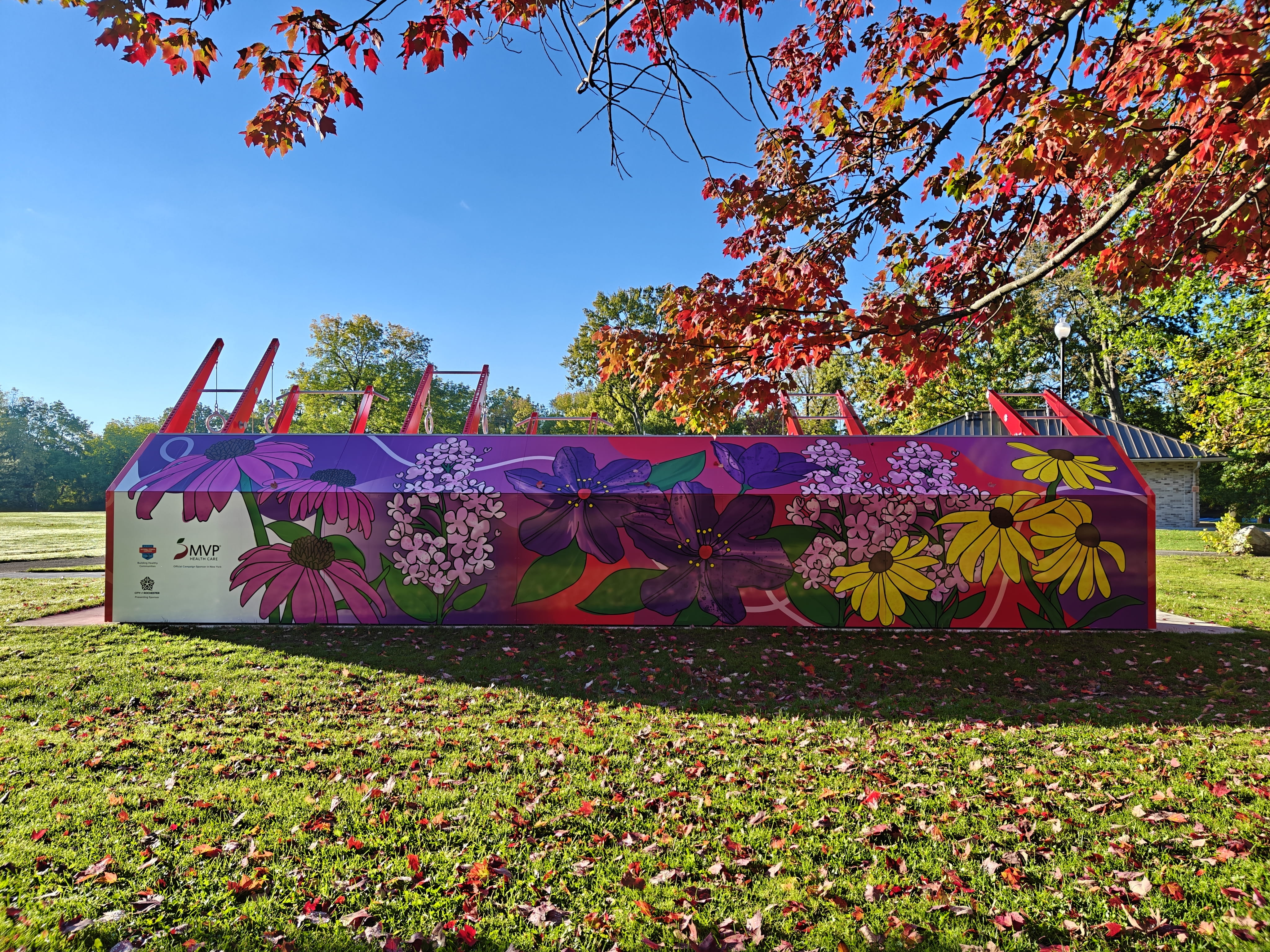
When the City of Rochester opened its first Fitness Court at Cobbs Hill Park in 2019, it was one of the earliest communities in New York to make that commitment. The second Fitness Court, now open at Genesee Valley Park along the Empire State Trail, is what happens when a long-term investment in public health pays off.
When researchers study what accessible outdoor infrastructure actually does to a community's health costs, the numbers are not subtle. A June 2026 economic impact report on the Empire State Trail found that the corridor generates $78 million in annual healthcare savings statewide, that 70 percent of trail visitors engage in over an hour of exercise per trip, and that every dollar invested in trail infrastructure returns $5.43 in economic value. Those figures do not come from a single trailhead or a single city. They come from a network, built over years, that makes active living the path of least resistance for the people who live near it.
Rochester is now part of that network in a more complete way. In 2019, the city opened a Fitness Court at Cobbs Hill Park, one of the first communities in New York to do so. On October 15, 2026, Rochester opened a second site at Genesee Valley Park, in a partnership with MVP Health Care and the National Fitness Campaign. The new Fitness Court is situated near other community offerings for families in a park that connects directly to the Empire State Trail, free and open to anyone 14 and up. That location was chosen deliberately.
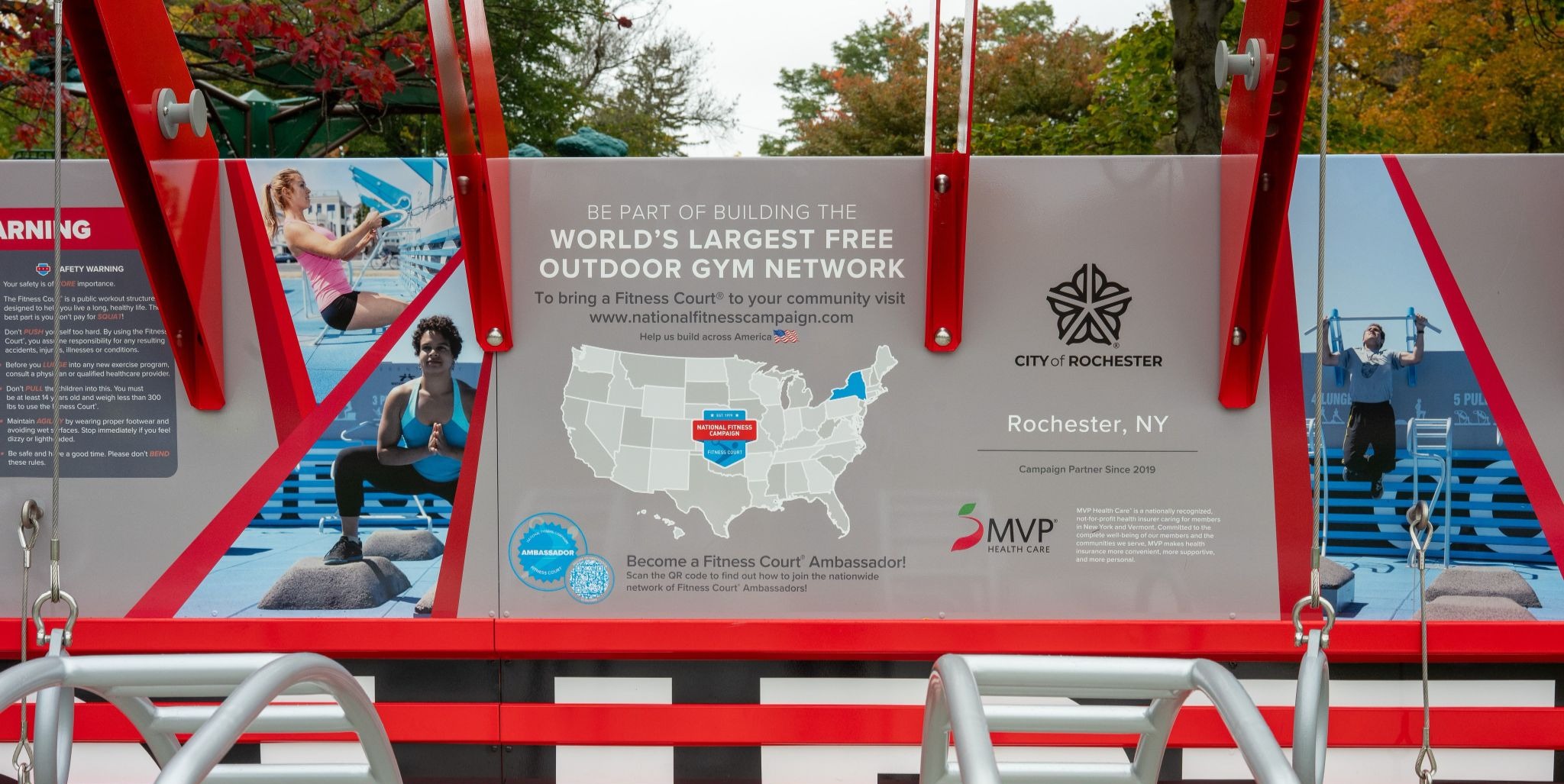
What Rochester's story offers is not just a launch announcement. It is a case study in what happens when a city commits to free outdoor fitness infrastructure, activates it well, watches it become part of daily life, and then expands it. That arc, from Cobbs Hill in 2019 to Genesee Valley in 2026, is worth tracing carefully, because it is increasingly the model for how communities that take public health seriously build toward lasting impact.
What seven years of activation actually proves
The decision to invest in a second Fitness Court is, in its simplest form, a statement about the first one. Cities do not expand infrastructure that is not working. Rochester's capital improvement plan brought a second Fitness Court to Genesee Valley Park because the investment at Cobbs Hill demonstrated something real: a free-to-use, well-placed outdoor gym becomes part of how a community moves through its parks. It becomes habitual. And when something becomes habitual, the case for expanding access to more neighborhoods becomes obvious rather than aspirational.
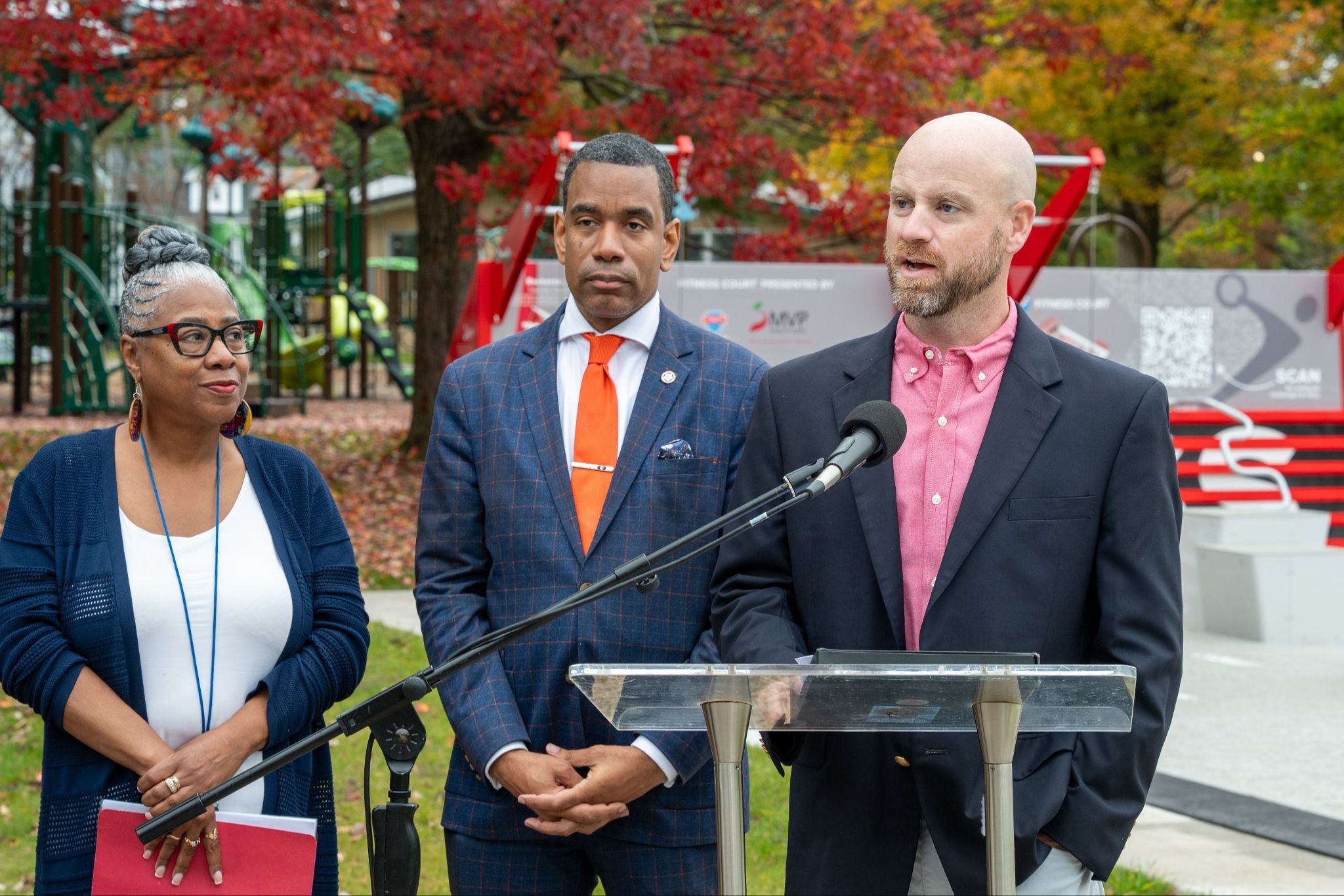
Dr. Shirley Green, Commissioner of the City of Rochester's Department of Recreation and Human Services, put it plainly at the October 15 ribbon cutting:
"Staying active and spending time outdoors is key for strong physical, mental and emotional health. With this Fitness Court, our community can access all of those benefits, and they are free." Dr. Shirley Green, Commissioner, Department of Recreation and Human Services, City of Rochester
That framing matters. Commissioner Green is not describing a new amenity. She is describing a public health intervention that happens to look like a park improvement. The distinction is important for any civic leader thinking about how to justify investment in outdoor fitness infrastructure: the return is not just in usage numbers. It is in avoided healthcare costs, in reduced barriers to physical activity, and in the compounding value of a community that stays active over time.
The Empire State Trail connection
Genesee Valley Park's connection to the Empire State Trail is not a footnote. It is the reason this particular location carries outsized public health significance.
The Empire State Trail is the longest single-state multi-use trail in the United States. The June 2026 economic impact report by Parks and Trails New York documented what that infrastructure is worth in concrete terms: the Trail generates $78 million in annual healthcare savings statewide. Seventy percent of trail visitors engage in over an hour of exercise per trip. Thirty-eight percent rely on the Trail for at least half of their weekly physical activity. The Erie Canalway segment, the branch that runs through Rochester, generates $29.4 million in annual physical health benefits alone.
Key findings from the Empire State Trail Economic Impact Report (Parks and Trails New York, June 2026):
- $78 million — Annual healthcare savings generated by the Empire State Trail statewide
- 70% — Of trail visitors engage in over an hour of exercise per trip
- $5.43 — Returned for every $1 invested in Empire State Trail infrastructure
- $29.4 million — Annual physical health benefits from the Erie Canalway Trail segment through Rochester
*Source: Parks and Trails New York, Empire State Trail Economic Impact Report, June 2026
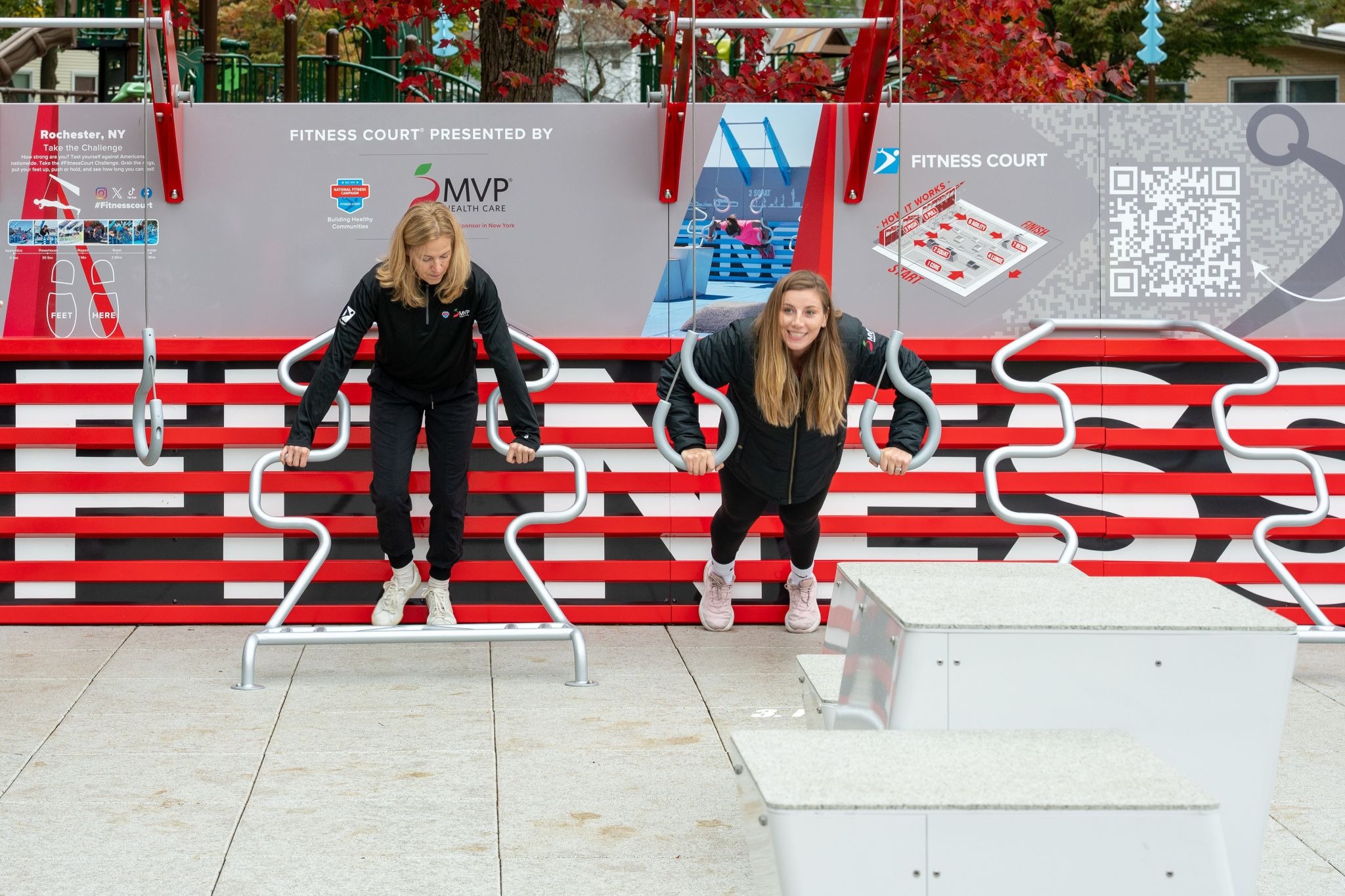
What does this mean for a Fitness Court at Genesee Valley Park? It means the equipment is being placed at the intersection of a major active transportation corridor and a city park that already draws residents out. The people who walk or bike the Empire State Trail through Rochester now have a seven-station outdoor gym at their doorstep. The people who come to Genesee Valley Park for a walk, for a weekend afternoon with their families, or for time in the green space near other community offerings, now have an activation point that extends their time outside and raises the quality of their movement. Both things are true at once, and both are worth something.
What the research says about infrastructure and health costs
The Empire State Trail report makes an argument that every parks director and civic leader in New York should read carefully: accessible outdoor infrastructure does not just feel good. It reduces healthcare expenditure in measurable, monetizable ways. When physical inactivity is linked to chronic conditions including cardiovascular disease, type 2 diabetes, and depression, and when those conditions generate real costs to individuals, insurers, and public health systems, the inverse is equally true. Every person who uses a trail, a park, or a free outdoor gym in lieu of a sedentary afternoon is a small but real reduction in future healthcare burden.
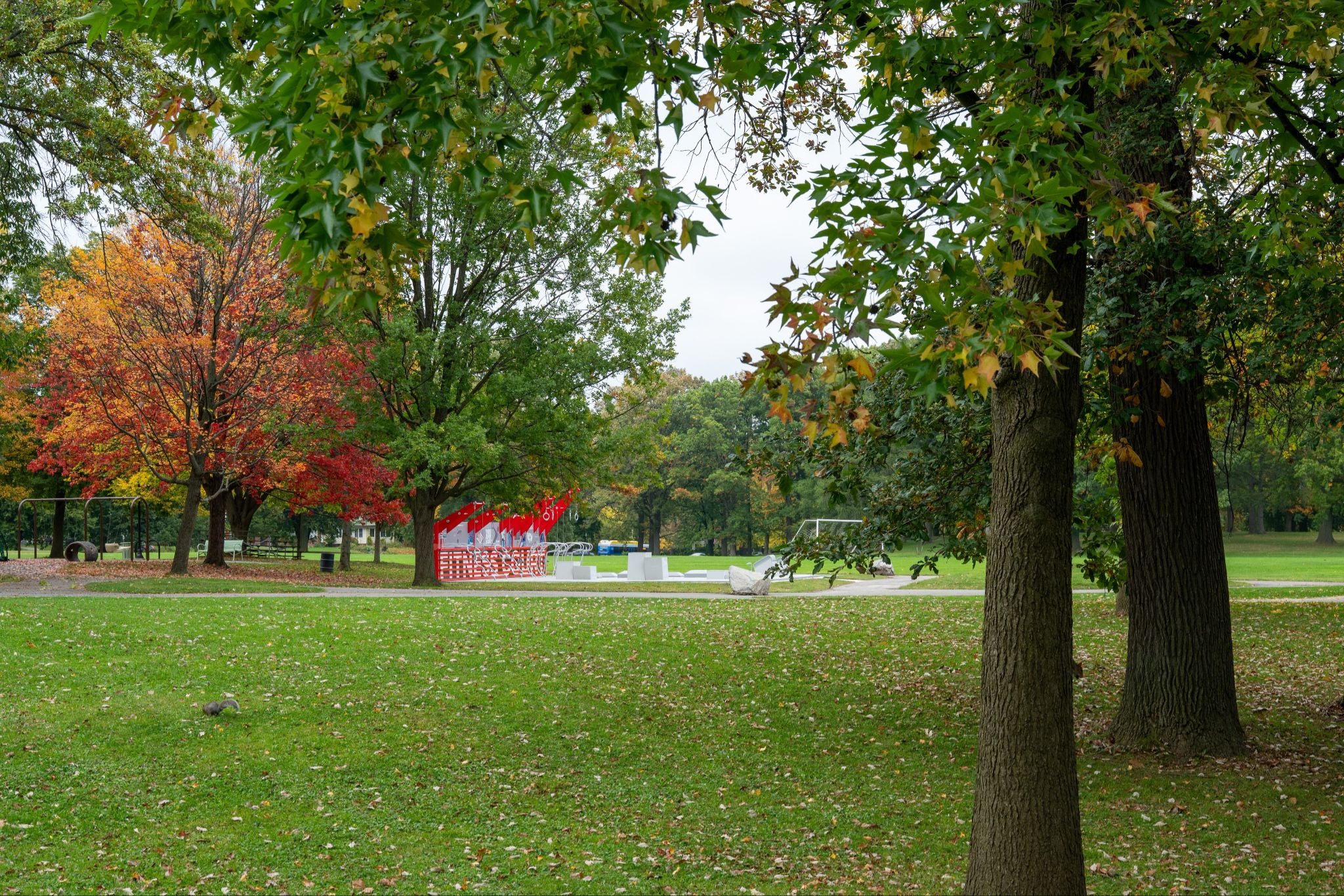
The Fitness Court at Genesee Valley Park fits into that larger system as the place that gives someone a structured, coached, bodyweight workout at the end of a bike ride, or a reason to leave the house when the trail alone does not feel like enough. The Fitness Court app functions as a coach in your pocket, providing guided workouts at beginner, intermediate, and advanced levels, which removes the expertise barrier that keeps many people from engaging with outdoor fitness equipment in the first place.
What Rochester's decision signals
A second Fitness Court is a different kind of statement than the first one. The first is a commitment. The second is a conclusion. Rochester concluded that free-to-use outdoor fitness belongs in more than one park, and chose a location that amplifies the public health value of an existing trail network rather than simply adding equipment to an empty lot.
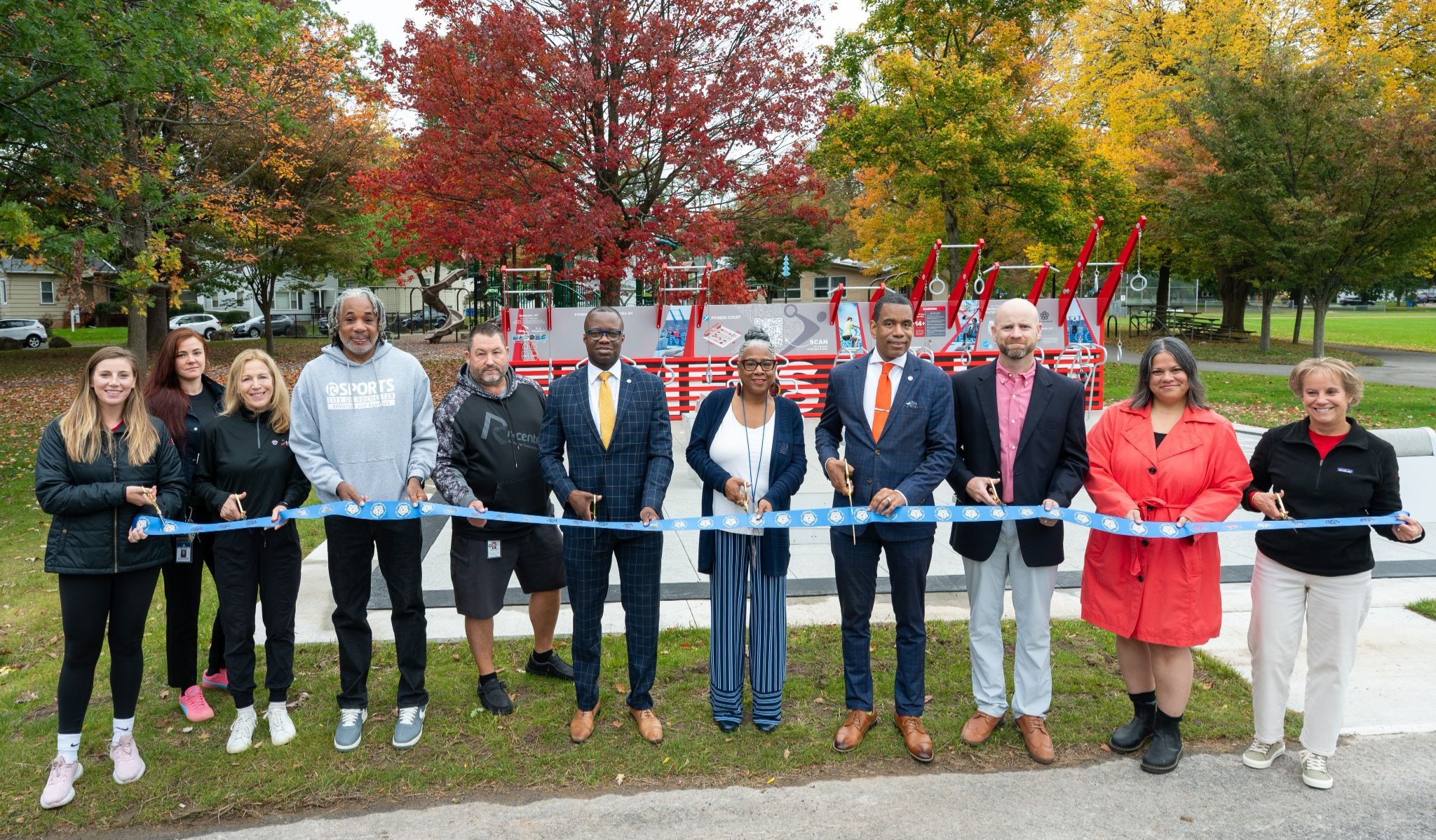
That is the model worth paying attention to. Not the ribbon cutting, but the thinking behind the site selection. Not the amenity, but the seven-year arc from Cobbs Hill to Genesee Valley that produced it. Communities that invest in accessible fitness infrastructure and activate it well do not stop at one site. They build networks. Rochester is doing exactly that, and the infrastructure research tells us that every node they add to that network is returning measurable value to the people who live near it.


